
Benefits, Risks, and the Best Ways to Serve Your Cat Carrots
Can cats eat carrots, or is that one of those foods that sounds healthy for people but doesn’t really belong in a cat’s bowl? It’s a fair question, especially when your kitty gets curious during meal prep or shows interest in whatever’s on your plate.
The good news is that carrots aren’t toxic to cats, and they can be a safe treat in small amounts. But that doesn’t mean you should start adding them to every meal. Carrots still aren’t a core part of a cat’s diet, and there are some things you need to know before you offer a bite.
In this article, we’ll look at when carrots are safe, what nutrients they contain, the potential benefits and risks, and the best way to serve them. We’ll also cover how carrots show up in some commercial cat food recipes and which other vegetables may be safe to offer once in a while.
Can Cats Eat Carrots Safely?
Yes, cats can eat carrots in small amounts when they’re prepared safely. Carrots aren’t toxic to cats, and small bite-size pieces of pet-safe vegetables can be offered as a snack. Still, carrots should only be an occasional treat, not part of a cat’s primary diet.
That matters because cats are obligate carnivores. Their nutritional needs are built around meat, and commercial cat food is designed around that meat-based foundation. So while cats can eat carrots, they still need animal-based food to meet their essential nutritional needs.
Are Carrots Good for Cats?
Carrots can offer a few useful nutrients, but they’re not a nutritional must-have for cats. In most cases, the real question isn’t whether carrots are good for cats in general, but whether a small serving fits safely into a balanced diet built around a cat’s regular food.
That’s why context matters. A few tiny pieces of carrot are very different from feeding too many carrots or trying to use vegetables to replace a meat-based meal. For most adult cats, carrots make more sense as a safe snack than as a meaningful part of everyday nutrition.
Nutrients Found in Carrots
Carrots contain dietary fiber and beta-carotene, along with vitamins and plant compounds that people often associate with healthy foods. They can also be a low-fat, low-calorie snack option when served in small amounts. However, cats need preformed vitamin A from their regular diet, so carrots shouldn’t be treated as an important source of this nutrient for cats.
However, cats don’t rely on veggies like carrots the way people do. Because cats eat meat to meet their core nutritional needs, nutrients in vegetables play a much smaller role in a cat’s diet. Carrots may add a little variety, but they don’t replace the nutritional value of a meat-based food.
Potential Health Benefits
In small amounts, carrots may work as a healthy treat for some cats. Their fiber content may help a little with digestion in some situations, and the texture of cooked carrot can appeal to curious kitties that like exploring different human foods.
That said, the health benefits are fairly limited. A cat isn’t likely to get major benefits from nibbling a few carrot pieces, and carrots aren’t a fix for digestive problems or other health issues. They’re better seen as an occasional extra than as a food with major nutritional value.
Potential Risks of Feeding Carrots to Cats
Carrots may be safe, but that doesn’t make them risk-free. The biggest concerns usually come down to texture, portion size, and preparation. A cat that gets too much carrot or the wrong form of carrot may end up with stomach upset instead of a simple treat.
This is especially important for kittens, older cats, and cats with digestive issues. A new food should always be introduced slowly, and any sign that your feline friend isn’t tolerating it well is a reason to stop and return to their regular food.
Raw Carrots and Choking Hazards
Raw carrots are one of the bigger concerns because they can be hard and difficult to chew. Large chunks can become a choking hazard, which is why vegetables should be cut into very small pieces before being offered. For cats, that risk matters even more because they usually don’t chew food the way people expect.
Cooked carrots are often easier to cut into tiny pieces and may be easier for some cats to manage than raw carrots. However, whether you offer raw or cooked carrots, they should always be plain, cut into very small pieces, and served in small amounts.
Digestive Upset and Too Many Carrots
Too many carrots can lead to digestive upset, especially in cats that already have sensitive stomachs. Even safe vegetables can cause digestive issues when they’re fed in large amounts or introduced too quickly. A cat that consumes too much fiber or unfamiliar food may end up with loose stool, vomiting, or general stomach discomfort.
That’s one reason carrots should stay in the occasional treat category. If a cat enjoys carrots, a very small amount is enough. Piling on extra vegetables doesn’t improve the cat’s diet and can crowd out more appropriate food.
How to Feed Carrots to Your Cat
If you want to feed carrots, simple preparation matters. Cats don’t need seasonings, butter, oils, sauces, or anything sweet added to vegetables. In fact, many common recipe additions are a bad fit for cats and can turn a safe snack into something you should avoid feeding.
That means plain is best. A tiny serving of plain carrot, prepared with your cat’s safety in mind, is much more appropriate than anything from a dinner plate, juice blend, or dessert recipe. Carrot cake, carrot juice, and other heavily prepared versions aren’t suitable substitutes.
Cooked vs Raw Carrots
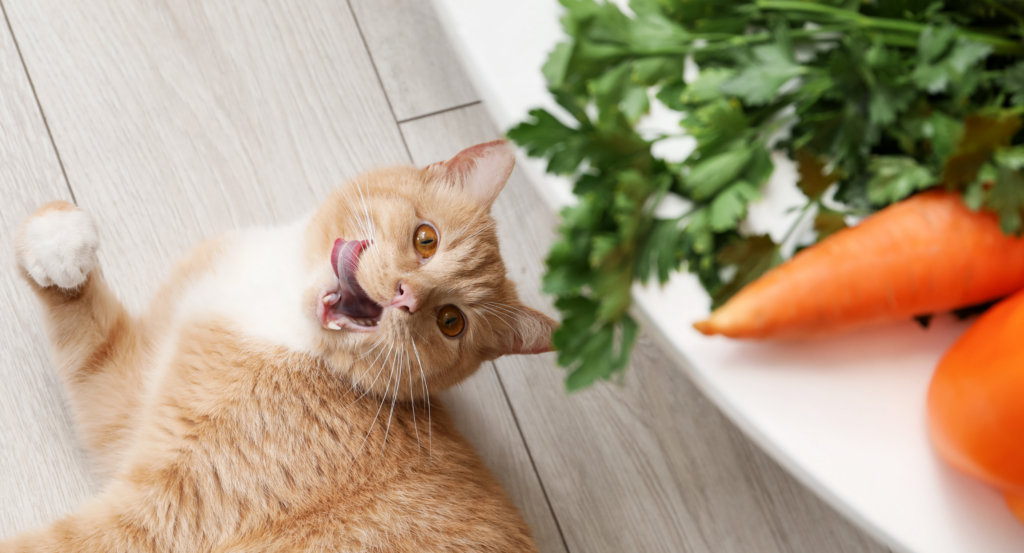
Cooked carrots are usually the more practical choice because they’re softer and easier to cut into tiny pieces. This can make them easier for some cats to manage.
Raw carrots aren’t toxic to cats, but their firm texture can be more difficult for some cats to chew. If you choose to offer raw carrots, make sure they’re cut into very small pieces to reduce the choking risk.
How Much Carrot Can Cats Eat?
Think of carrots as a treat, not a meal. A few tiny, cooked pieces are more than enough for a taste test. Carrots should never replace your cat’s primary, meat-based diet or make up more than a tiny fraction of their total food intake.
That’s true for kittens and adult cats alike. Kittens can safely try a tiny amount of carrots, but they don’t offer the nutrients growing cats need most. Whether you’re feeding kittens, adult cats, or older cats, the main focus should stay on complete cat food built around meat.
Carrots in Commercial Cat Food
Carrots also show up in some commercial cat food formulas, which can make them seem more important than they really are. In reality, vegetables in cat food are usually included in small amounts alongside meat-based ingredients, not as the nutritional center of the recipe.
A cat food recipe may include carrots, pumpkin, sweet potato, or other vegetables, but the overall formula is still meant to support a carnivore’s nutritional needs. In that setting, carrots are part of the ingredient mix rather than the main reason the food works.
Why Some Cat Food Recipes Include Carrots
Some recipes include carrots because they add plant-based vitamins, minerals, antioxidants, or fiber in small amounts. In a balanced cat food recipe, carrots can add to the nutritional mix without getting in the way of the meat that cats need.
That doesn’t change the fact that cats are obligate carnivores. Even when cat food includes carrots or other veggies, the food still needs to be built around the right protein, fat, taurine, and other essentials that support a cat’s nutritional needs.
Earthborn Holistic Cat Food Recipes with Carrots
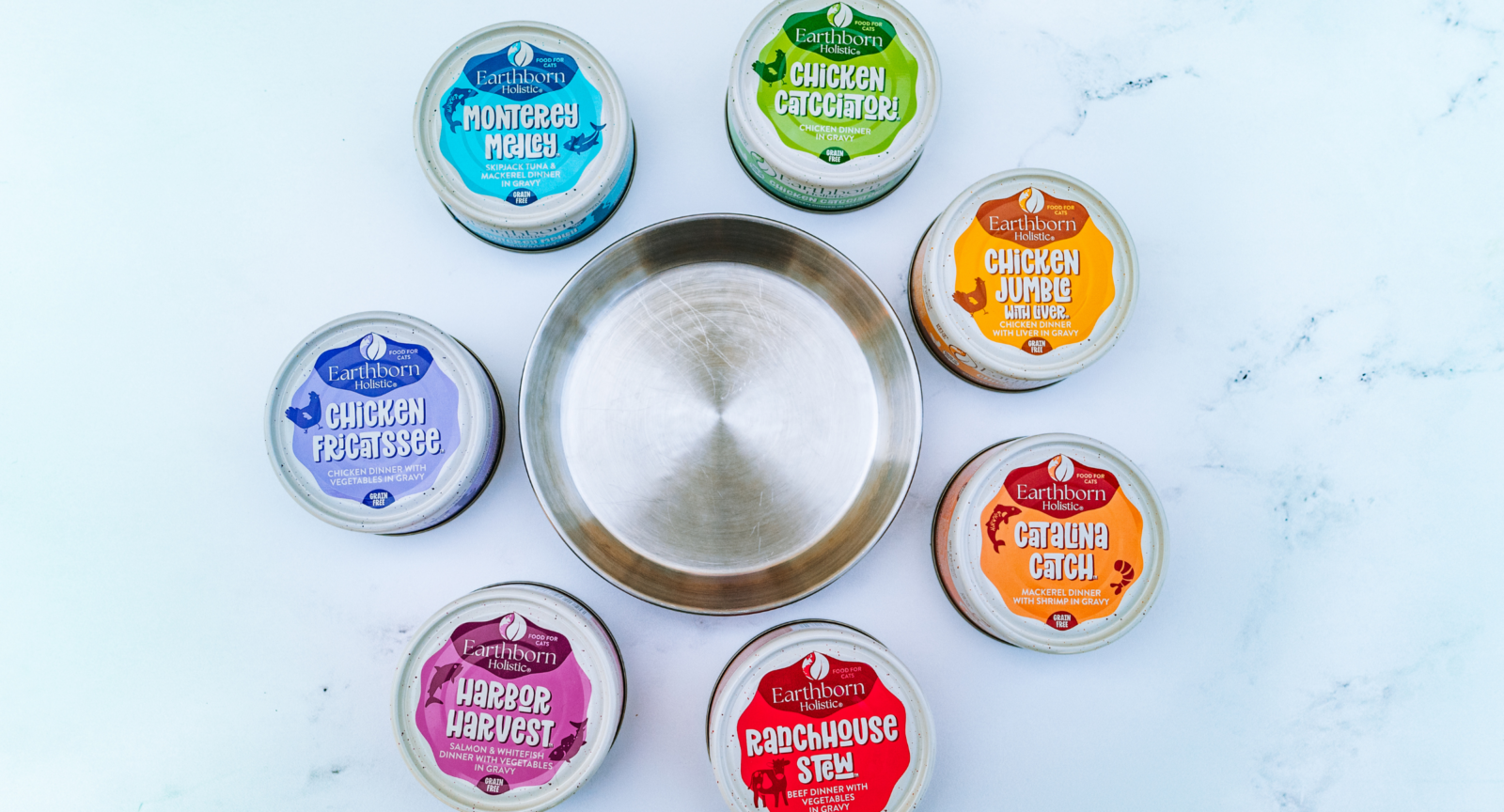
At Earthborn Holistic, we include carrots in some of our grain-free recipes, but not as a featured ingredient. For example, in our Primitive Feline formula, carrots are part of a mix that includes chicken, chicken meal, pumpkin, sweet potato, apples, blueberries, cranberries, and spinach.
We designed this recipe as a high-protein option for cats and kittens. It includes taurine, added vitamins and minerals, omega fatty acids, and probiotics as part of its complete and balanced nutritional profile.
You’ll see the same approach in our Wild Sea Catch recipe. Salmon, Pacific whiting meal, and whitefish meal are the leading ingredients. Carrots appear further down the list with other fruits and veggies like apples, blueberries, cranberries, and spinach.
This formula includes taurine, omega-3 and omega-6 fatty acids, probiotics, and added vitamins and minerals. Carrots are simply a supporting ingredient in a recipe that puts meat and fish first.
So, what does this mean for you as a pet parent? It means that when you see carrots in our cat food, you can trust they’re part of a complete recipe that centers your cat’s nutritional needs around animal-based ingredients. While carrots are part of the recipe, the real benefits come from the balanced blend of protein, fats, and other nutrients your cat needs to thrive.
What Other Vegetables Can Cats Eat?
Some vegetables can be shared in small amounts, but they should always stay secondary to a meat-based diet. Options that are often mentioned as safer choices include small amounts of pumpkin, green beans, broccoli, cauliflower, and celery when they’re served plainly and prepared carefully. Even then, many cats may not be interested, and that’s perfectly fine.
What matters most is keeping portions tiny and preparation simple. Plain, softly cooked vegetables are generally easier to manage than raw or heavily seasoned versions, and extras like butter, salt, sauces, or other potentially harmful additions should stay out of the bowl.
It’s also important to remember that garlic and other allium foods are toxic to cats, and unripe tomatoes and several other common foods can cause problems too. So if you want to offer other vegetables, the safest move is to check each one individually before feeding it.

Key Takeaways
- Small amounts work best. Cats can eat carrots safely in small portions, but they should stay in the occasional treat category. A few tiny, plain pieces are enough.
- Meat still comes first. Because cats are obligate carnivores, carrots should never replace the meat-based food that supports their real nutritional needs. A balanced cat food should always do the heavy lifting.
- Cooked is usually safer. Soft, cooked carrots are easier to chew and less likely to become a choking hazard than raw chunks. That makes them the better choice for most cats.
- Too much can cause problems. Feeding too many carrots may lead to digestive upset or crowd out more appropriate foods. Even safe veggies can become an issue when portions get too large.
- Carrots can appear in cat food. Some commercial recipes include carrots in small amounts alongside meat-based ingredients. In those formulas, carrots are just one supporting ingredient in a much bigger nutritional picture.
- Not every vegetable is safe. Some vegetables may be fine in moderation, but garlic, onions, and similar foods should always be avoided because they’re toxic to cats. When in doubt, it’s better to check first than to guess.
Should Carrots Be Part of Your Cat’s Routine?
So, can cats eat carrots? Yes, they can in small, plain, properly prepared portions. For some cats, that may mean a few soft bites of carrot as a safe snack now and then. For others, it might be the small amount of carrot that’s part of their balanced pet food recipe. But carrots are never a substitute for the meat-based food that supports a cat’s real nutritional needs.
The best approach is to keep carrots simple, occasional, and modest in portion size. If your cat enjoys them and tolerates them well, that can be perfectly fine. But if there’s any sign of digestive problems, choking risk, or general disinterest, it’s better to stick with the foods your cat already does well on.