How to Transition a Dog to New Food?
Dogs are creatures of habit at mealtime. Many pet parents worry that transitioning dog food may upset their dog’s digestive system. Questioning if it is bad to switch dog food or dog food brands?
Switching dog food often leads to uncomfortable symptoms for dogs like having diarrhea after switching food or other symptoms like vomiting that no pet parent wants to see their furry friend to experience. Which is why we recommend a gradual 7-day transition schedule that gently introduces the new food while slowly reducing the old. Your dog’s digestive system needs time to adjust to new ingredients, so when you’re wondering when to change your puppy to adult food, they wont have negative reactions.
When switching protein sources to help with food sensitivities or adjusting their diet for health issues, structured approach helps their gut adapt smoothly and keeps your dog comfortable throughout the change.
This guide covers everything you need to know about safely changing your dog’s food and when to switch to adult food without issues. We’ll explore the complete 7-day timeline, how to handle transitions between different food types like kibble to wet food, and the common reasons pet parents make dietary changes. Every dog is different, so we’ll also discuss how to adjust the process for dogs with sensitive stomachs or special needs.
Why Dogs Need a Gradual Food Transition
Understanding Your Dog’s Digestive System
Dogs have a sophisticated digestive system that relies on beneficial bacteria to break down food and absorb nutrients properly. Gut microbial creates a delicate balance that’s perfectly tuned to your dog’s diet. So when new ingredients are added suddenly, this bacterial ecosystem can’t adapt quickly enough to handle the change.
The digestive system produces specific enzymes for different foods, and it takes time to ramp up production for unfamiliar ingredients. That’s why food transition for dogs allows the gut bacteria to slowly adjust and prevents the upset stomach or loose stool that many dogs experience when transitioning dog food.
Dogs eating the same food consistently develop bacterial populations designed specifically for that formula, so switching too fast doesn’t give these helpful microorganisms the chance they need to adapt. So the best way to switch dog food is the 7 day dog food transition schedule.
Timeline for Digestive Adaptation
Most healthy dogs need at least 7-10 days to fully adjust to new food. This window gives their digestive system time to recognize different nutrient profiles and ingredient combinations. Dogs with particularly sensitive stomachs often need even longer transition periods.
Here’s something interesting about canine digestion: it takes dogs anywhere from 4-12 hours to fully process a meal, with the average being 8-10 hours depending on their size, the food type, and how active they are. This explains why digestive upset can occur within hours of eating something new. The gradual transition approach introduces small amounts of new ingredients with each meal, preventing the system from becoming overwhelmed.
You’ll know the new food is working well when you see consistent stool formation, less gas, and steady energy levels in your dog. Keep a close eye on their bathroom habits, appetite, and overall behavior during the transition.
Consequences of Rushing the Process
When you switch dog food too quickly, the digestive system struggles to keep up, leading to various uncomfortable symptoms. Watch for signs like vomiting, diarrhea, excessive gas, changes in stool appearance, loss of appetite, and increased drooling. Puppies face higher risks because their digestive systems are still developing.
These symptoms usually last 1-3 days following a dietary change. However, if your dog continues having diarrhea or vomiting for more than 3-4 days, you need to call your veterinarian. Red flags that need immediate attention or need to seek a veternarian include blood in stool or vomit, severe vomiting episodes, noticeable weight loss, and unusual lethargy.
If digestive issues appear during your transition, slow down the schedule or go back to the previous food ratio temporarily. Many veterinarians recommend adding a probiotic supplement to help restore the gut’s bacterial balance and make the adjustment easier. Some dogs just simply won’t tolerate certain foods no matter how slowly you introduce them, which could signal an allergy or intolerance to specific ingredients.
The 7-Day Transitioning Dog Food Schedule
A structured 7-day transition schedule provides the foundation for safely switching your dog’s food. This timeline works for most dogs and applies whether you’re changing brands, formulas, or protein sources. The schedule allows gut bacteria to adapt, reduces vomiting and diarrhea, and supports better nutrient absorption.
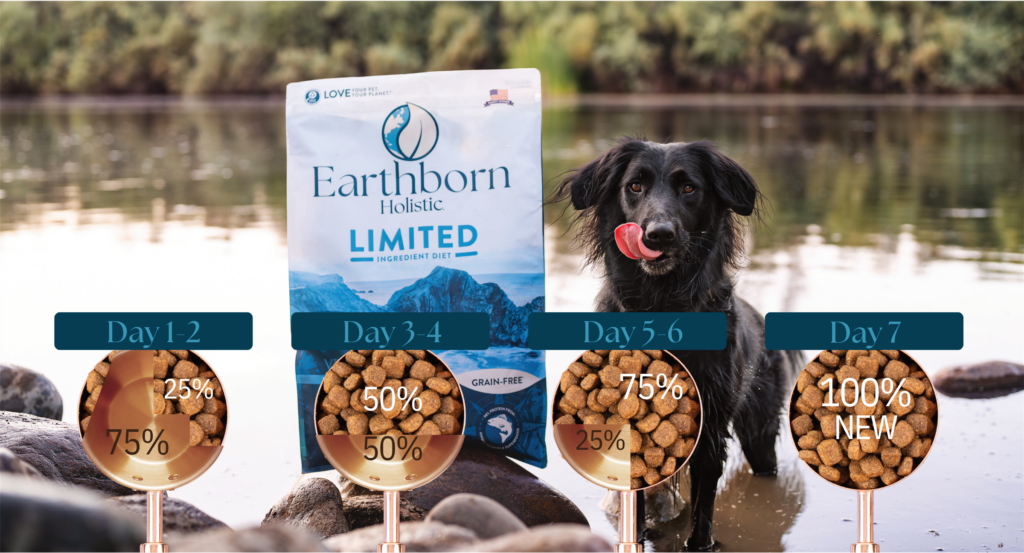
Day 1-2: 25% new food, 75% old food
Start with a gentle introduction by mixing 25% new food with 75% old food. If your dog normally eats one cup daily, combine 1/4 cup new food with 3/4 cup old food. Use measuring cups to maintain consistent portions and prevent overfeeding during the transition.
Watch your dog closely during these first two days. Monitor their behavior, stool consistency, and appetite. Slight softening in feces is normal as their system begins adjusting, but watery diarrhea means you need to slow down the process.
Day 3-4: 50% new food, 50% old food
Move to equal parts new and old food. This 50/50 ratio marks the transition midpoint where your dog’s digestion starts actively adapting to the new ingredients. Look for positive signs like reduced gas and more consistent stools.
Keep everything else stable during this crucial phase. Avoid introducing new treats or table scraps that could complicate the adjustment process.
Day 5-6: 75% new food, 25% old food
Increase the ratio to 75% new food and 25% old food. Following our cup example, this means 3/4 cup new food mixed with 1/4 cup old food. At this stage, your dog’s digestive system and immune system has mostly adapted to the new ingredients.
Continue monitoring for any concerning signs like vomiting, loss of appetite, or persistent loose stools. These symptoms suggest the transition may be moving too quickly for your individual dog.
Day 7: 100% new food
Complete the transition by serving only the new food. If no negative reactions appear, your dog food transition is successful. Maintain regular feeding regular dog food recipes and mealtimes throughout the entire process.
Adjusting the Timeline for Sensitive Stomachs
Dogs with sensitive stomachs may need 7-9 days or longer for a smooth switch. Some require 7-14 days to fully adjust. Extend the timeline by adding extra days at each ratio stage rather than rushing the process.
If digestive issues persist despite a slower approach, contact your veterinarian to rule out ingredient sensitivities or allergies. Every dog is different, and some may need specialized guidance for successful dietary changes.
How to Transition Between Different Food Types
Different food types require adjusted transition approaches. Texture, moisture content, and caloric density all affect how your dog’s digestive system responds when transitioning dog food.
Switching from Kibble to Kibble
Brand-to-brand kibble changes follow the standard 7-day schedule we outlined. Mix both foods thoroughly to prevent your dog from picking out their favorite pieces. After your dog has adapted to a specific brand, changing between different protein options within the same product line can often be done without a complete transition. This makes rotational feeding within a single manufacturer much simpler for dogs who are comfortable with that formula base.
Transitioning from Kibble to Wet Food
Kibble to wet food switches require 14-21 days rather than the standard week. For example, switching from Earthborn Holistic Coastal Catch to K95 wet food. Wet food contains significantly more moisture, so you’ll need about 3.5 times more wet food by volume to provide equivalent nutrition.
For proper conversion, one 3-ounce can equals approximately 1/4 cup kibble, while one 13-ounce can equals 3/4 to 1 cup kibble. Always match calories rather than volume when calculating portions. Start by adding small amounts of wet food while reducing kibble proportionally to avoid overfeeding.
Switching from Wet Food to Kibble
Wet to dry food transitions typically take 10-14 days. Many dogs resist this change because they prefer the texture and aroma of wet food. Add warm water to the kibble to enhance its smell and make it more appealing.
You can temporarily mix the moistened kibble, then gradually reduce water content once your dog accepts the taste. Remove any uneaten moistened food after 20 minutes to prevent spoilage.
Changing Between Wet Food Brands
Wet food brand changes follow the standard 7-day transition schedule. Like kibble switches, mixing both foods thoroughly prevents selective eating. Choose similar protein sources and textures when possible to minimize adjustment challenges.
Common Reasons for Switching Dog Food
Pet parents make dietary changes for their furry family members throughout their lives. Understanding when and why to switch helps you make thoughtful food choices that support your dog’s changing nutritional needs.
When to switch from puppy food to dog food
Your puppy’s size determines when they’re ready for adult food. Small breeds under 25 pounds transition to adult food at 9-10 months of age. Medium-sized breeds weighing 25-50 pounds when fully grown make the switch around 12-14 months. Large breeds over 50 pounds require puppy food until 12-24 months because of their extended growth period.
The key indicator is when puppies reach 80-90% of their predicted adult size. Your veterinarian can help determine the right timing based on your dog’s individual development and breed characteristics.
Transitioning to senior dog food
Most dogs become seniors around age seven, though larger breeds age faster and may need senior food by five or six years. Certain dogs require a longer adjustment period, especially when changing food formats. Transitioning dog food from kibble to wet food may take 14–21 days, and dogs with sensitive digestive systems often benefit from a slower, carefully managed approach.
Watch for signs that your dog might benefit from senior nutrition, such as decreased energy, slower movement, or changes in appetite. These specially formulated diets help maintain your senior dog’s health and comfort during their golden years.
Transitioning because of food allergies or sensitivities
Food allergies develop after repeated exposure to specific proteins, with beef, chicken, dairy, and wheat being common triggers. Symptoms include itching, vomiting, diarrhea, and ear infections. Limited ingredient diets or novel proteins help identify and eliminate allergens.
If your dog shows signs of food sensitivities, work with your veterinarian to identify the problematic ingredient. The gradual elimination process takes patience, but finding the right diet can dramatically improve your dog’s quality of life.
Medical conditions requiring diet changes
Diabetes, kidney disease, liver disease, heart disease, and digestion conditions require prescription diets. Your veterinarian recommends specific therapeutic nutrition to manage chronic diseases.
These diets are specialized and formulated to support your dog’s specific health needs. Never attempt to manage medical conditions through diet changes alone—always follow your veterinarian’s guidance for the best outcomes.
Changing protein sources
Rotational feeding involves regularly changing proteins to provide nutritional variety. Different proteins contain different vitamin levels—beef offers Vitamin A, rabbit provides Vitamin D, and salmon delivers Omega-3 fatty acids. Rotate proteins monthly or every few months.
This approach can help prevent food sensitivities from developing and ensures your dog receives a broader spectrum of nutrients. Just remember to use the gradual transition process each time you switch protein sources.
Conclusion
Food transitions do not need to be stressful when you follow a thoughtful approach. The gradual 7-day schedule protects your dog’s digestive system and helps avoid the uncomfortable symptoms that come with sudden dietary changes. Whether you’re making the switch because life stage changes, food sensitivities, or your veterinarian’s recommendation, patience during the process makes all the difference.
As a pet parent, you know your dog best. Watch for signs that the transition is going smoothly—consistent stools, good appetite, and normal energy levels all indicate success. Remember that some dogs need extra time, and that’s perfectly normal. The goal is keeping your furry family member comfortable and healthy throughout the change.
Stick to the timeline, trust the process, and you’ll help your dog adjust to their new food successfully. With the right approach, you can make dietary changes confidently while supporting your dog’s health and happiness.
Key Takeaways
Transitioning your dog to a new food successfully takes patience and a careful, step-by-step approach to help prevent digestive issues and ensure your pet’s comfort.
• Follow the 7-day transition schedule: Start with 25% new food mixed with 75% old food, gradually increasing new food by 25% every two days until reaching 100% new food.
• A gradual food transition is important because your dog’s digestive system needs time to adapt to new ingredients. Switching foods too quickly can upset the balance of gut bacteria and result in vomiting, diarrhea, or gas.
• Extend the timeline for sensitive dogs or different food types: Kibble-to-wet food transitions need 14-21 days, while dogs with sensitive stomachs may require up to two weeks.
• Monitor your dog’s stool consistency, appetite, and energy levels throughout the transition—persistent symptoms lasting more than 3-4 days warrant veterinary consultation.
• Common transition triggers include life stage changes (puppy to adult food), medical conditions, food allergies, and protein rotations for nutritional variety.
Remember that every dog is unique, and some may need longer adjustment periods. The key is maintaining consistency with a gradual approach while watching for signs that indicate whether to proceed or slow down the transition process.