Is Taurine Good for Cats? Why This Amino Acid Is Essential
A cat can eat plenty of protein and still run into serious health problems if one key nutrient is missing: taurine. Your cat depends on this amino acid for healthy vision, heart function, digestion, reproduction, and development, yet their body can’t make enough of it to meet daily needs.
In this guide, you’ll learn what taurine does inside your cat’s body, why taurine deficiency can be so harmful, and where cats get this essential nutrient. We’ll also explain how much taurine your cat needs and why it’s included in Earthborn Holistic cat food recipes.
Why Do Cats Need Taurine?
Taurine is often called an essential amino acid for cats, although technically it differs from amino acids used to build proteins. What matters is simple. Your cat needs a steady supply of taurine from their diet to stay healthy.
Its effects reach several parts of the body, including the heart, eyes, digestive system, and reproductive system. That makes taurine much more than a minor addition to a cat food label.
Heart and Muscle Function
Taurine plays an important role in normal heart muscle function. When cats become severely taurine deficient, the heart muscle can weaken and lose its ability to pump blood efficiently.
The connection between taurine deficiency and feline heart disease became especially clear in the 1980s. Researchers found that some cats with dilated cardiomyopathy improved after receiving taurine, leading to major changes in the way commercial cat foods were formulated.
Dilated cardiomyopathy causes the heart muscle to weaken and enlarge. As the condition progresses, the heart may struggle to pump blood effectively, potentially leading to congestive heart failure. Today, taurine-deficiency DCM is much less common in cats eating properly formulated food.
Vision and Retinal Health
Taurine is found in particularly high concentrations in the retina, the layer of tissue at the back of your cat’s eye that detects light. Retinal cells need taurine to function normally and stay healthy.
If your cat becomes taurine deficient for an extended period, these cells can begin to break down. The resulting condition is known as feline taurine retinopathy, or feline central retinal degeneration.
Vision changes may be difficult to notice at first because cats are very good at navigating familiar spaces. Your cat may rely more heavily on memory, smell, hearing, and whisker sensation before you realize their eyesight has changed.
Once retinal degeneration becomes advanced, the damage may be permanent. Keeping enough taurine in your cat’s diet is therefore far more effective than trying to address vision loss after it develops.
Digestion, Reproduction, and Immune Health
Taurine also has an important job in digestion. Cats use it to form bile salts, which help break down and absorb dietary fats in the digestive tract.
Unlike many other animals, cats rely heavily on taurine when producing these bile salts. Some taurine is then lost rather than recycled, which adds to the amount your cat needs to get from food.
Reproductive health depends on taurine as well. A deficiency during pregnancy can interfere with normal pregnancy and fetal development, potentially contributing to low birth weights, poor growth, or developmental problems in kittens born to taurine-deficient mothers.
Taurine also supports normal cell function and contributes to a healthy immune system. Its wide range of roles helps explain why even a nutrient needed in relatively small amounts can have such a large effect on your cat’s health.
Why Cats Can’t Make Enough Taurine on Their Own
Your cat’s body can produce a little taurine from other amino acids, but the process isn’t efficient enough to cover everything they need. Cats have limited activity of the enzymes involved in synthesizing taurine, so dietary intake has to make up the difference.
At the same time, cats continually use taurine to make bile salts for fat digestion. Because some is lost through the gastrointestinal system, your cat needs a dependable supply coming back in through food.
This is one of the nutritional differences between cats and dogs. Dogs generally have a greater ability to synthesize taurine, while cats depend far more heavily on their diet. It’s also one reason dog food shouldn’t become your cat’s regular food.
Food type can influence taurine needs as well. Processing, ingredients, moisture content, and digestion can all affect how much taurine is available to your cat, so dry food and canned foods aren’t necessarily formulated with identical concentrations.
Fortunately, you don’t have to calculate all of this yourself. Commercially prepared cat foods that are complete and balanced for the appropriate life stage are formulated with feline taurine requirements in mind. The pet food adequacy statement is one of the most useful parts of the label to check.
What Happens When Cats Don’t Get Enough Taurine?
Taurine deficiency in cats generally develops gradually. Your cat isn’t likely to become deficient after missing one meal or sneaking some dog food, but a consistently inadequate diet can eventually deplete taurine levels.
The health problems that follow can affect several organ systems. Some improve when the deficiency is caught early, while others may cause permanent damage.
Dilated Cardiomyopathy
One of the best-known effects of taurine deficiency is dilated cardiomyopathy, commonly shortened to DCM. In affected cats, the heart chambers enlarge as the muscle becomes weaker.
Your cat may initially show subtle changes such as reduced activity or poor appetite. As heart function declines, more serious clinical signs can include rapid breathing, weakness, exercise intolerance, or symptoms of congestive heart failure.
When taurine deficiency is responsible and treatment begins early enough, taurine supplementation may help improve heart muscle function. That said, you shouldn’t rush to start supplements whenever your cat seems tired, as many unrelated health problems can cause similar symptoms.
Any suspected heart problem deserves a veterinary checkup. Your vet can examine your cat, perform appropriate testing, and determine whether diet, genetics, another medical condition, or a combination of factors is involved.
Feline Taurine Retinopathy
Taurine deficiency can also damage the retina. The changes typically begin in a specific area of the eye and gradually spread as retinal cells continue to degenerate.
Over time, your cat’s normal vision can become increasingly impaired. Because the process may develop quietly, obvious behavior changes can appear later than you might expect.
Adding taurine once retinal damage is advanced won’t restore cells that have already been destroyed. Correcting the deficiency can help prevent further damage, but established vision loss may remain.
That makes prevention particularly important. Feeding an appropriate cat food consistently is a simple way to protect against a nutritional problem that could otherwise have permanent consequences.
Reproductive and Developmental Problems
Cats also need enough taurine during breeding, pregnancy, nursing, and kitten growth. A taurine-deficient mother cat may experience problems with reproduction or pregnancy, while her developing kittens can be affected before they’re even born.
Possible effects include poor fetal development, low birth weights, slower growth, and abnormalities in kittens born to deficient mothers. These risks make proper nutrition especially important for pregnant and nursing cats.
Kittens continue to have demanding nutritional needs once they begin eating solid food. Their diet needs to provide taurine alongside protein, fats, vitamins, minerals, and other nutrients required for healthy development.
If you’re caring for a pregnant cat or young kittens, choose food formulated for the appropriate life stage rather than improvising with meat or a homemade diet. Your vet can also help you monitor body condition and growth along the way.
Where Do Cats Get Taurine?
Taurine occurs naturally in animal tissue, which fits perfectly with your cat’s biology as an obligate carnivore. Meat, fish, and internal organs can all contribute taurine to the diet.
Natural sources alone, however, don’t guarantee that a meal is nutritionally complete. Cats need a careful balance of many nutrients, which is why the full diet matters more than any single ingredient.
Animal-Based Proteins
Animal-based proteins are your cat’s natural dietary source of taurine. Muscle meat and internal organs contain taurine in varying amounts, while plant ingredients generally provide very little.
That doesn’t mean simply filling your cat’s bowl with chicken, beef, or fish will meet their needs. Taurine levels differ between tissues, and cooking, storage, processing, and the loss of cooking liquids can affect the amount available in a finished meal.
Your cat also needs plenty of other amino acids and essential nutrients in the right amounts. A diet can contain lots of animal protein and still be nutritionally incomplete if important vitamins, minerals, fatty acids, or other nutrients are missing.
If you want to feed a homemade diet, have it formulated specifically for your cat by a board-certified veterinary nutritionist. The WSAVA nutrition guidelines offer helpful information on evaluating diets and nutritional recommendations.
Complete and Balanced Cat Food
For most cats, complete commercial cat food is the simplest way to provide enough taurine consistently. Manufacturers can account for naturally occurring taurine in the ingredients and add supplemental taurine when needed.
Look for food labeled complete and balanced for your cat’s life stage. This indicates that the recipe is intended to provide all required nutrients rather than functioning only as a treat, topper, or complementary food.
You’ll often see taurine listed directly in the ingredient panel. Keep in mind, though, that other ingredients may still contain some taurine naturally. Supplemental taurine helps the manufacturer make sure the finished food reaches the intended nutritional level despite natural variation and processing.
If your cat has gastrointestinal problems or another health condition that may affect nutrient digestion or absorption, nutritional needs can become more complicated. In that situation, ask your vet whether a standard diet is still the best choice.
How Much Taurine Does Your Cat Need?
If you’re wondering how much taurine your cat needs, you usually won’t need to measure it yourself. Pet food standards account for taurine requirements when establishing nutrient profiles for complete cat foods.
The exact amount included in a recipe can vary because dry and wet foods are made and digested differently. Moisture content, processing methods, ingredients, and taurine availability all influence formulation.
For that reason, comparing two foods based only on a taurine number can be misleading. A more practical approach is to choose a food that meets recognized nutritional standards for your cat’s life stage and follow the feeding directions.
Healthy cats eating an appropriate complete and balanced diet generally don’t need additional taurine supplementation.
There are exceptions. Cats eating an unbalanced homemade diet or dealing with certain health problems may need dietary supplementation, but that decision is best made with your vet or a veterinary nutritionist.
Taurine in Earthborn Holistic Cat Food
Earthborn Holistic cat food recipes include taurine as part of a complete and balanced approach to feline nutrition. The goal isn’t simply to add one beneficial ingredient, but to provide taurine alongside the protein, fats, vitamins, minerals, and other nutrients your cat needs.
For you, that means there’s no need to measure supplemental taurine into each bowl when you’re feeding an appropriate complete recipe.
Why Taurine Is Added to Cat Food Recipes
Even recipes built around animal protein can benefit from added taurine because naturally occurring amounts vary. Processing can also influence how much of the nutrient remains available in the finished food.
Adding a measured source of taurine helps create more consistent nutrition from one batch to the next. It also allows the final recipe to be formulated around established feline nutrient requirements rather than relying on estimates from individual ingredients.
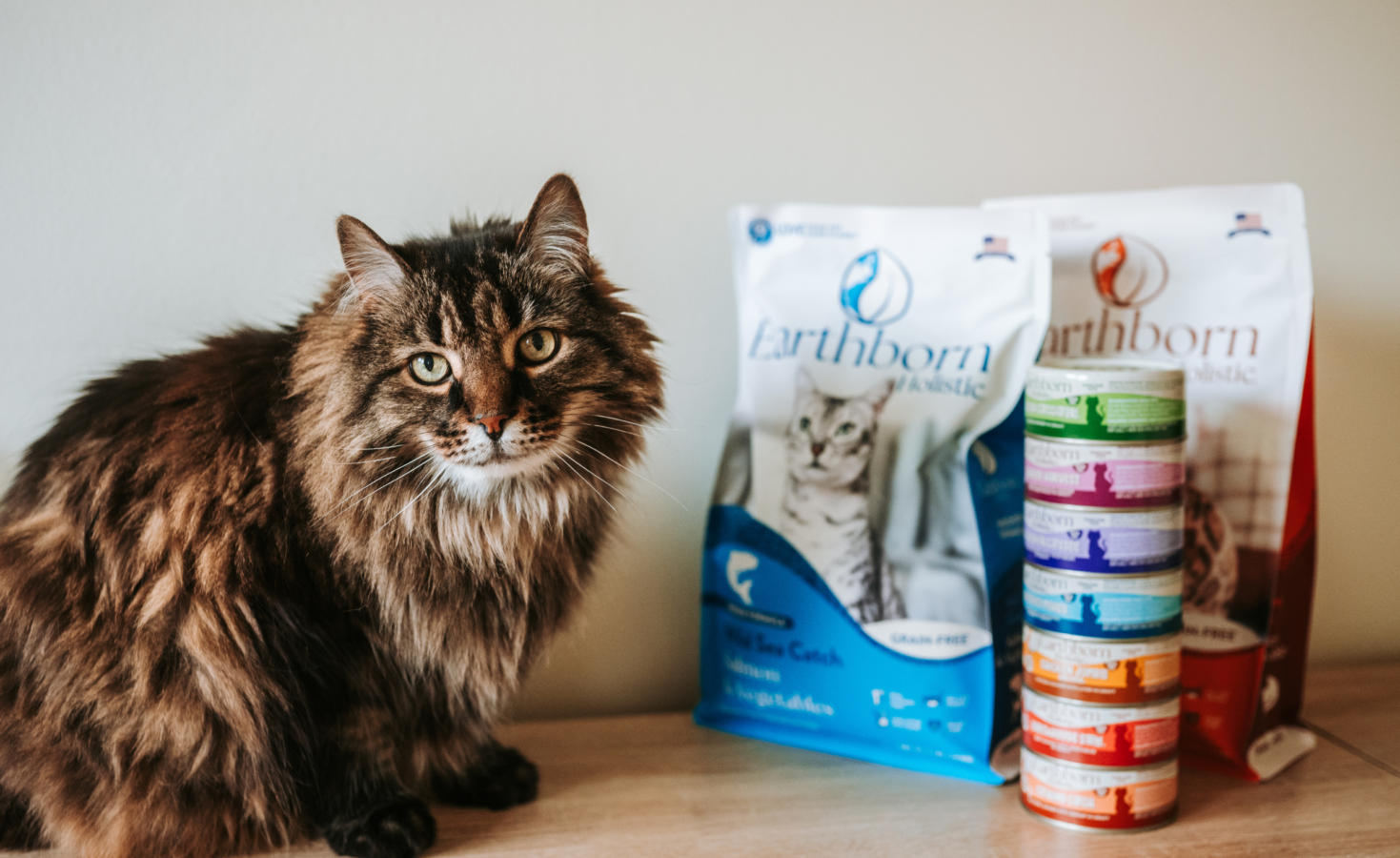
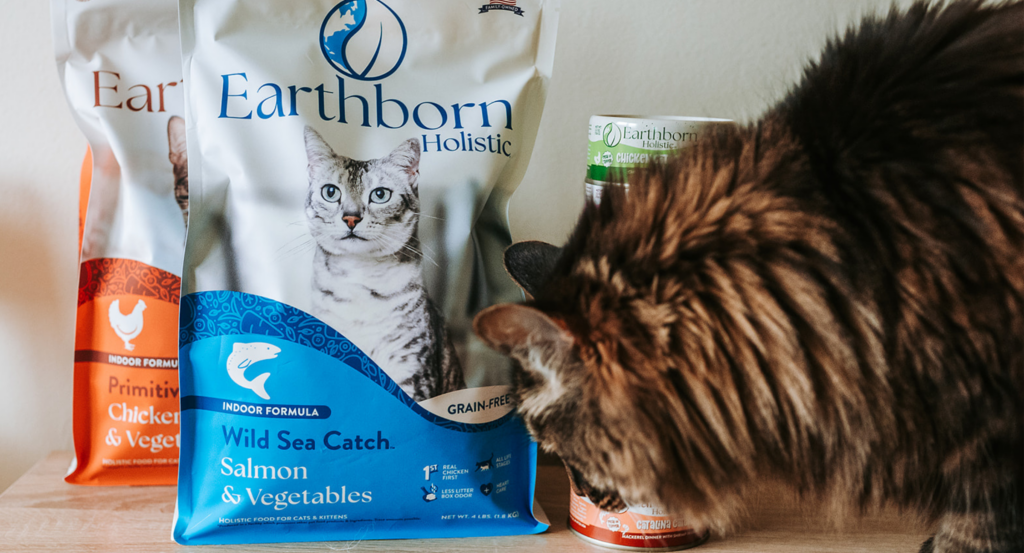
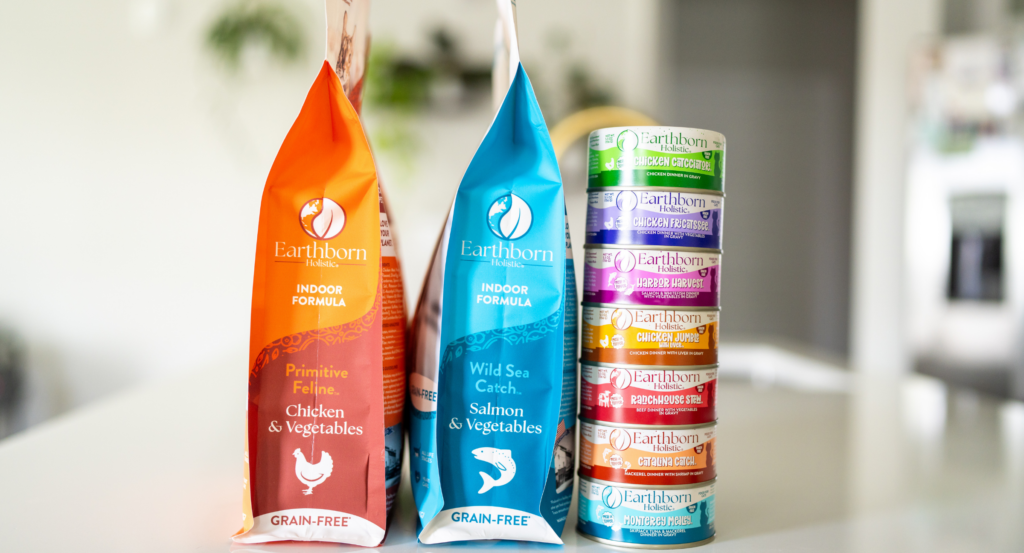
You’ll find taurine included in Earthborn Holistic recipes such as Primitive Feline and Wild Sea Catch.
When you’re comparing formulas, check the current package or product page for the latest ingredient list and nutritional information. That gives you the most accurate picture of what you’ll actually be feeding.
Choosing a Complete and Balanced Earthborn Holistic Recipe
Taurine is important, but it shouldn’t be the only thing guiding your choice. Your cat’s life stage, preferred texture, body condition, activity level, and individual health needs all deserve consideration.
If your cat prefers kibble, recipes such as Primitive Feline and Wild Sea Catch offer dry-food options built around animal-based proteins. And if your kitty would rather eat softer food, we also offer a selection of wet grain-free recipes.
Neither dry food nor wet food is automatically better simply because of taurine. Properly formulated versions of both can provide what your cat needs.
Start with a recipe intended for your cat’s life stage, then pay attention to how your cat does on it. Appetite, body condition, stool quality, coat condition, and your vet’s feedback can all help you decide whether you’ve found a good fit.
Key Takeaways
- Taurine isn’t optional. Your cat can’t synthesize enough taurine to meet their needs, so they have to get it through food. A steady dietary supply supports health throughout every life stage.
- Several body systems depend on it. Taurine supports normal heart muscle function, vision, digestion, reproduction, fetal development, and other cellular processes. Its benefits reach far beyond one organ or one stage of life.
- A deficiency can cause lasting harm. Taurine deficiency in cats can lead to dilated cardiomyopathy, feline taurine retinopathy, and reproductive or developmental problems. Some effects may improve after the deficiency is corrected, while retinal damage can become permanent.
- Animal tissue naturally contains taurine. Meat, fish, and internal organs provide this nutrient, but feeding those foods alone doesn’t guarantee a balanced diet. Your cat still needs many other nutrients in carefully controlled amounts.
- Commercial cat food simplifies things. Complete and balanced cat foods are formulated with feline taurine needs in mind. For most cats eating an appropriate commercial diet, separate taurine supplements aren’t necessary.
- Get advice before supplementing. If you’re feeding a homemade diet or suspect your cat could be taurine deficient, speak with your veterinarian. They can assess the whole diet instead of focusing on taurine alone.
What Does Taurine Mean for Your Cat’s Long-Term Health?
Taurine may be only one nutrient on a cat food label, but your cat depends on it every day. A reliable dietary supply helps protect heart function, eyesight, digestion, reproduction, and normal development, while long-term deficiency can have serious consequences.
The good news is that meeting this need doesn’t have to be complicated. Choose a complete and balanced cat food suited to your cat’s life stage, keep up with regular veterinary checkups, and get professional guidance before making major changes or adding supplements.