
Dog Boarding: Everything You Need to Know
When it comes to traveling, leaving your furry friend behind can be a daunting task. Whether it’s a weekend getaway or an extended vacation, ensuring your dog is well cared for is paramount. Dog boarding can be a great solution, but it requires careful consideration and planning.

This guide will walk you through everything you need to know about boarding dogs. We will go over how to select the right kennel, understanding the costs, and what to expect during your pet’s stay.
Understanding Dog Boarding
Dog boarding refers to the temporary care of your pet in a facility designed to accommodate dogs while their owners are away. These pet boarding facilities can range from basic kennels to luxurious resorts that offer a variety of services. Understanding what dog kenneling entails is the first step in making an informed decision.
What is Dog Boarding?
Dog boarding is a service that provides a safe and supervised environment for dogs when their owners are unavailable. Dog kenneling facilities typically offer various amenities, including play areas, sleeping quarters, and sometimes even grooming and training services. The goal is to ensure that your dog feels comfortable and secure while you are away.
Types of Dog Boarding Facilities
Finding the right boarding option for dogs can be hard. It’s important to know your options to give you peace of mind knowing you picked the right one and to give your dog the special care they deserve. There are several types of dog boarding options available:
- Traditional Kennels: These are basic facilities that provide a place for overnight dog boarding. They often have individual kennels and may offer limited playtime.
- Luxury Boarding: These dog boarding kennels provide a more upscale experience almost like a pet resort. These facilities often offer dog boarding and training. Many will also include spacious accommodations, play areas, and additional services like grooming.
- In-Home Boarding: Some pet sitters offer to take care of your dog in their own home. This provides a more personal and less stressful environment.
- Dog Daycare: While primarily for daytime care, many doggy daycares also offer dog overnight boarding services.
Choosing the Right Kennel
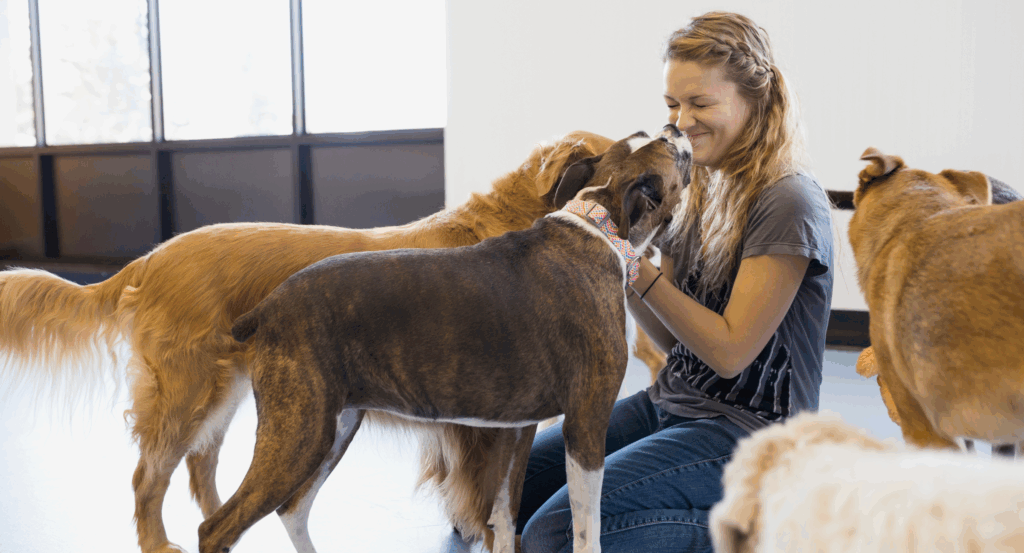
Selecting the right dog kenneling services is crucial for your dog’s well-being. Here are some key factors to consider:
Research and Recommendations
Start by asking friends, family, or your veterinarian for pet boarding recommendations and overall guidance on dog boarding. Be sure to ask for the best dog boarding near you. Looking up online reviews for “the best boarding for dogs near me” can help provide insight into other pet parents’ experiences. Look for facilities that have a good reputation and positive feedback.
Facility Tours
Some of the best advice for first time dog boarding is to visit the kennel. Before making a decision, we suggest scheduling a visit to the dog kennel boarding facility. A reputable dog kennel will welcome you and allow you to tour the premises. Pay attention to cleanliness, the condition of the accommodations, and how staff interact with the dogs.
Staff Qualifications
Inquire about the qualifications and training of the do boarding staff. They should be knowledgeable about dog behavior and care, and ideally, have experience in handling various breeds and temperaments.
How to Prepare Your Dog for Boarding
If you are wondering “What should be done before boarding a dog for the first time?”, follow this quick first time dog boarding checklist. Preparation is key to ensuring a smooth boarding experience for both you and your dog. Here are some steps to take:
Trial Runs
Consider arranging a short trial stay at the boarding facility. Many facilities offer for you to leave your dog for a short time to allow them to acclimate to the environment. Also, helping you assess how they handle being away from home.
Health Check
Schedule a visit to your veterinarian to ensure your dog is up to date on vaccinations and overall health. Many boarding facilities require proof of vaccinations to prevent the spread of diseases.
Familiarization
You can help your dog adjust to being away from home by gradually introducing them to new environments and people. This can reduce anxiety during their stay.
Immunization Requirements
Most boarding facilities have specific immunization requirements to protect all dogs in their care. Common vaccinations include:
- Rabies
- Distemper
- Parvovirus
- Bordetella (Kennel Cough)
Make sure to provide the necessary documentation to the boarding facility before your dog’s stay. Many kennels also require basic dog training like being potty trained.
What to Expect During Your Dog’s Stay
Understanding what happens during your dog’s boarding experience can help ease your mind. Here’s what you can typically expect:
Daily Routine
Most boarding facilities have a structured daily routine that includes feeding, playtime, and rest periods. Dogs are usually grouped based on size, temperament, and energy levels to ensure safe interactions.
Activities and Socialization
Many facilities offer various activities to keep dogs engaged. This may include play sessions, dog training exercises, and even water activities for those who enjoy swimming. Socialization with other dogs can be beneficial for your pet’s mental health.
Health Monitoring
Staff members should monitor the health and behavior of the dogs closely. If any issues arise, they should have protocols in place to address them, including access to veterinary care if needed.
Costs of Dog Boarding
A big question is always “how much does it cost to boarding a dog”? Understanding the costs associated with dog boarding can help you budget accordingly. Here are some factors that influence the price:
Average Dog Boarding Costs
To understand how much boarding a dog costs, it’s important to consider your location, facility type, and the services offered. The cost of boarding can vary widely, but on average you might expect to pay anywhere from $25 to $75 per night. Luxury facilities may charge more, while basic kennels may be on the lower end of the spectrum.
Additional Fees
Be aware of any additional dog boarding costs that may apply, such as:
- Grooming services
- Training sessions
- Medication administration
- Special dietary needs
Discounts and Packages
Some facilities offer discounts for extended stays or package deals. It’s worth inquiring about any available promotions to help reduce costs.

What to Bring When Boarding Your Dog
Preparing for your dog’s stay involves packing a few essential items. Here’s a checklist of what to bring:
Essential Items for Dog Boarding
- Food: Bring your dog’s regular food to avoid any dietary disruptions.
- Treats: Having your dog’s favorite treats can help them feel more relaxed. This can also be helpful if they are enrolled in training as well.
- Medications: If your dog requires medication, ensure you provide clear instructions and enough supply for their stay.
- Comfort Items: A favorite toy or blanket can help your dog feel more at home.
Documentation
Don’t forget to bring any required documentation, including vaccination records and emergency contact information.
Differences Between Dog Boarding and Pet Sitting
While both boarding and pet sitting provide care for your dog, they differ in several ways:
Dog Boarding
- Location: Dogs stay in a facility with other pets.
- Socialization: Dogs have the opportunity to interact with other dogs and staff.
- Structured Environment: Facilities typically have a set routine for feeding, playtime, and rest.
Pet Sitting
- In-Home Care: A pet sitter comes to your home to care for your dog.
- Personalized Attention: Your dog receives one-on-one care in a familiar environment.
- Less Stress: For some dogs, staying at home can reduce anxiety associated with being in a new place.
Safety Concerns in Dog Boarding
Safety is a top priority when it comes to boarding. Here are some considerations to keep in mind:
Facility Standards
It’s always good to look up “the best pet boarding near me for dogs” to ensure that the boarding facility adheres to safety standards, including proper sanitation, secure fencing, and emergency protocols. A well-maintained facility will prioritize the health and safety of all pets.
Staff Training
Inquire about the training and experience of the staff. They should be equipped to handle emergencies and understand canine behavior to prevent incidents.
Health Monitoring
A reputable facility will monitor the health of all dogs closely. If your dog shows signs of distress or illness, staff should be prepared to take appropriate action.

What to Expect When Picking Up Your Dog
After your dog’s stay, the pickup process can be an emotional experience. Here’s what to expect:
Condition of Your Dog
When you arrive, observe your dog’s behavior. A happy, healthy dog should be excited to see you and show no signs of distress. Look for any physical signs of discomfort or injury.
Feedback from Staff
The staff should provide feedback on your dog’s behavior during their stay. They may share insights about how your dog interacted with others and any activities they enjoyed.
Transitioning Home
Once home, give your dog time to readjust. They may be tired from their stay, so allow them to rest and gradually return to their normal routine.
Conclusion
Dog boarding can be a great solution for pet owners needing temporary care for their furry friends. By understanding the ins and outs of the boarding process, you can make informed decisions that prioritize your dog’s comfort and well-being. Whether you choose a kennel or a pet sitter, the key is to ensure your dog feels safe and loved while you’re away. With the right preparation and research, you can enjoy your travels knowing your pet is in good hands.