
Can Cats Eat Spinach? A Complete Guide for Pet Parents
Cats are curious eaters, and many pet parents wonder whether they can add leafy greens like spinach belong in their kitty’s diet. While cats are obligate carnivores that primarily thrive on meat, some vegetables can safely complement their meals in small amounts. Spinach is one of the most asked-about options, but is it really safe for your cat to eat?
In this article, we’ll explore everything you need to know about cats and spinach. We’ll look at what cats are naturally meant to eat, the nutritional value of spinach, safe serving methods, and special considerations for sensitive cats. By the end, you’ll have a clear understanding of whether spinach can be a healthy choice for your feline friend.
Spinach and Your Cat’s Natural Diet
Cats are obligate carnivores, which means their digestive system is built to process animal protein and fat, not large amounts of plant-based foods.
This doesn’t mean they can’t eat vegetables at all, but it does mean their meals should always be centered on high-quality cat food and lean meat. So where does spinach fit in? Let’s break it down.
What Cats Are Designed to Eat
Cats naturally eat meat as the primary source of energy. Their bodies need amino acids like taurine, found only in animal protein, to maintain good health, support red blood cells, and keep the nervous system functioning properly.
Plant-based foods, including leafy green vegetables like spinach, don’t provide all the nutrients cats need on their own.
Because of this, spinach can never replace meat or a cat’s main diet. At best, it should only be considered as an occasional treat that complements good quality cat food, not as a substitute for essential nutrients.
Can Spinach Be Part of a Balanced Diet?
Many cats can eat spinach in small amounts without issue. However, too much spinach may cause digestive upset or interfere with calcium absorption due to naturally occurring compounds like oxalates.
If you’re feeding spinach, it should be in moderation and always paired with a complete and balanced diet designed for cats.
When pet parents make thoughtful food choices, spinach can be an occasional addition. But remember – a cat’s daily calorie intake should mostly come from animal protein, not plant-based foods.
Nutritional Value of Spinach for Cats
Spinach is a nutrient-rich leafy green vegetable that contains several essential vitamins and minerals. While cats don’t need spinach to stay healthy, these nutrients may provide some benefits if served correctly. Let’s take a closer look:
Key Nutrients Found in Spinach
Spinach contains vitamin K for blood clotting, vitamin C for immune function, and folic acid to support red blood cells. It also has beta carotene, which promotes eye health, and fiber, which may support a cat’s digestive system when offered in small amounts.
However, cats already get most of these nutrients from high quality cat food and meat. Spinach is not necessary but may add extra nutritional benefits when included sparingly.
Potential Health Benefits
For some cats, spinach may help maintain healthy skin, support the immune system, and provide anti-inflammatory properties. It may also contribute to overall health by adding fiber and small amounts of essential vitamins.
Still, the health benefits are modest compared to what cats gain from meat. Pet parents should never assume that vegetables like spinach or green beans can replace the core nutrients in a cat’s diet.
How to Serve Spinach Safely
If you decide to let your cat eat spinach, preparation matters. Some forms are safer than others, and careful serving ensures your pet’s health stays protected.
Cooked vs. Raw Spinach
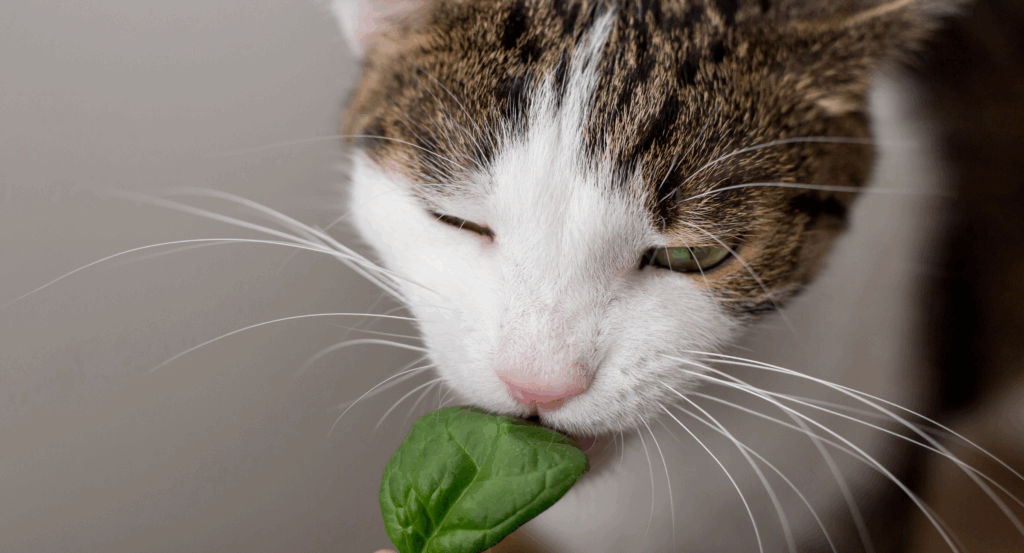
Cats can eat both raw spinach and cooked spinach, but cooked spinach is usually easier on the digestive system. Cooking softens the leafy green and reduces the risk of a choking hazard. Raw spinach may be harder for some cats to digest and can lead to an upset stomach.
Cooked spinach, when plain and free of oils, seasonings, or butter, is the safest option for your furry feline friend.
Tips for Safe Preparation
- Keep it plain. Always serve spinach without salt, garlic, onions, or seasonings, since these human foods can cause serious health problems in cats.
- Serve in small amounts. Too much spinach may lead to digestive upset or interfere with calcium absorption.
- Chop it finely. Cutting cooked spinach into small pieces helps reduce the risk of choking and makes it easier for cats to eat.
- Make it occasional. Spinach should only be a treat, not a daily staple in your cat’s diet.
What About Cat Food with Spinach?
Some high-quality cat food brands include spinach as a safe vegetable alongside meat-based ingredients. In this case, spinach is balanced with other nutrients, making it a healthy choice. Many cat owners may feel more comfortable relying on cat food formulas rather than offering plain spinach from the table.
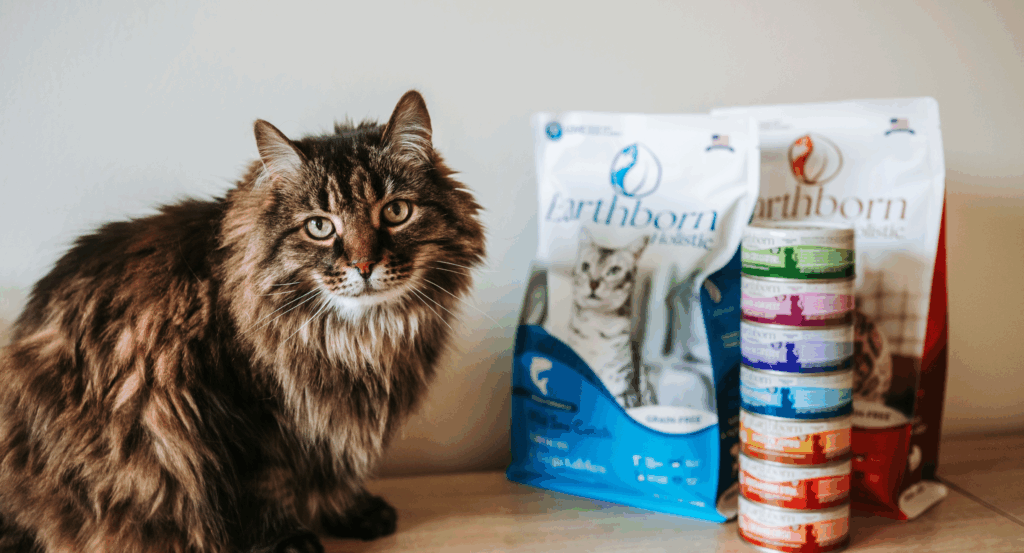
At Earthborn Holistic, we include spinach in select recipes to provide naturally occurring antioxidants, vitamins, and fiber alongside premium proteins.
In our Primitive Feline recipe, spinach is part of a superfood blend with other fruits and vegetables to support skin, stomach, and overall health. Our Wild Sea Catch recipe also features spinach to complement salmon-rich protein, helping to support immune function, digestion, and a shiny coat.
Both Primitive Feline and Wild Sea Catch give you safe, balanced ways to introduce spinach into your cat’s diet. By choosing these recipes, you can offer your feline friend the benefits of spinach along with premium proteins and other nutrient-rich ingredients, all in a diet designed to keep them healthy and thriving.
Things to Keep in Mind for Sensitive Cats
While many cats can eat spinach safely, some are more sensitive than others. This is especially true for cats with certain health conditions.
Every Cat is Different
Some cats react well to spinach, while others may develop harmful crystals in the urinary tract. Calcium oxalate, naturally found in spinach, can contribute to bladder stones or kidney stones in sensitive cats. For cats prone to urinary tract issues, feeding spinach can cause more harm than good.
For these reasons, it’s always best to talk to your vet before introducing spinach or other safe vegetables to your cat’s specific diet.
Making Thoughtful Food Choices
As mentioned earlier, pet parents should prioritize high-quality cat food and lean meat as the core of a cat’s diet. Occasional treats like spinach or green beans can be offered sparingly, but only if your cat tolerates them well.
Too much spinach or the wrong preparation could lead to food poisoning, upset stomach, or other health problems. When in doubt, stick with healthy treats made for cats to protect your pet’s health and overall wellbeing.
Key Takeaways
- Cats are obligate carnivores. They’re designed to eat meat, not large amounts of plant-based foods.
- Spinach has nutrients. Vitamins and minerals like vitamin K, folic acid, and beta carotene can offer small nutritional benefits.
- Cooked spinach is safer. It reduces the risk of choking and upset stomach compared to raw spinach.
- Moderation is key. Too much spinach can lead to calcium oxalate bladder stones or interfere with calcium absorption.
- Vet advice matters. Always consult your vet before adding new human foods to your cat’s diet.
Should You Let Your Cat Eat Spinach?
Spinach can be a safe vegetable for many cats when served properly and in moderation. It offers some nutritional benefits, but it’s never a replacement for a meat-based diet or high-quality cat food.
If your feline friend is healthy, a little spinach as an occasional treat is unlikely to cause problems. But if your cat has urinary tract issues, kidney stones, or other health concerns, it’s best to avoid spinach altogether. As a pet parent, making thoughtful food choices will always be the best way to protect your cat’s health.